Football Injury Recovery explores targeted strategies for recovery. Discover new paths to mobility, healing, and personalized care.

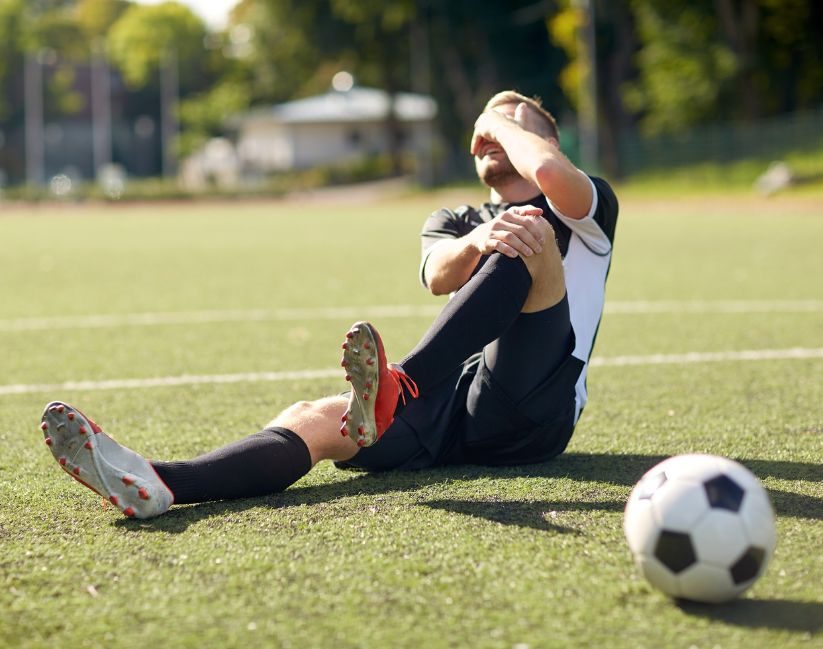
Football is a sport of power, speed, and high-impact contact. Whether you’re sprinting down the field, tackling, or changing direction in a split second, your body is constantly under stress. Injuriesminor or majorare common. But what separates a fast, full recovery from a slow or incomplete one? The answer is sports-specific therapy.
At YourFormsUX (YFS), we help football athletes recover not only from injury but also toward better performance. Our sports-specific therapy tracks focus on restoring function, reinforcing weaknesses, and preparing the body to handle the exact demands of the game again.
Why Football Players Face Unique Recovery Challenges
Football places intense strain on nearly every part of the body. Its a contact-heavy sport that demands acceleration, agility, strength, and enduranceall within seconds. That leads to a wide range of injuries:
ACL and MCL tears
Hamstring strains
High ankle sprains
Concussions
Shoulder dislocations
Lower back strains
Recovery from these injuries doesnt just mean healing. It means restoring power, movement patterns, and mental confidenceall while preventing re-injury.
What Is Sports-Specific Therapy?
Unlike general rehabilitation, sports-specific therapy is customized for the athletes sport, position, and physical profile. It blends physical therapy with strength conditioning, mobility work, and return-to-play readiness.
For football players, this means:
Focusing on lateral movement, explosive power, and change-of-direction drills
Re-training for contact readiness and load absorption
Addressing impact zones like shoulders, knees, and hips
Position-based recovery protocols (e.g., different therapy for a lineman vs. a wide receiver)
At YFS, our football-focused therapy programs are data-driven and designed for real-world football scenarios.
Football Injury Recovery: Phase by Phase
Lets walk through what sports-specific therapy for football injury recovery looks likestep by step.
1. Acute Injury Management (Days 110)
The first goal is to control swelling, manage pain, and protect the injured area. We assess:
The mechanism of injury
Surrounding joint function
Basic range of motion and load tolerance
YFS approach includes:
Cryotherapy, compression, and manual therapy
Early mobility exercises to prevent stiffness
Gentle muscle activation for circulation and control
We also begin planning the next phases with your return-to-play timeline in mind.
2. Restorative Mobility and Strength (Weeks 24)
Once the injury stabilizes, we introduce progressive loading:
Passive and active range-of-motion exercises
Isometric and resistance training
Core stabilization for whole-body support
If you’re recovering from a hamstring strain, for example, you’ll work on controlled eccentric contractions, hip positioning, and glute engagement.
YFS uses functional movement screening to guide which exercises are introduced and how quickly to progress.
3. Neuromuscular Re-education and Functional Movement (Weeks 46+)
At this stage, its about regaining dynamic control. You start moving like an athlete again:
Balance and proprioception drills (single-leg work, unstable surfaces)
Plyometrics to reintroduce jump landings and takeoffs
Core-driven rotational exercises to prepare for cutting and tackling
Each session is sport-specific and mimics actual on-field movements. We focus on:
Landing mechanics to prevent ACL re-injury
Hip and trunk control to absorb contact
Footwork and agility to return directional sharpness
4. Sports-Specific Reintegration (Weeks 610+)
This is where therapy becomes full-speed football training:
Position-based agility and sprint mechanics
Simulated football drills with sport-relevant patterns
Contact-readiness and reactive drills for coordination
For example:
A quarterback might focus on shoulder mobility and trunk rotation while integrating drop-backs
A defensive back might work on lateral shuffles, hip flips, and sprint recovery
A lineman may focus on stance control, drive power, and core stability
We assess game-readiness using metrics like:
Joint stability under dynamic stress
Power output during explosive drills
Confidence and control in game-like situations
Common Football Injuries and Their Therapy Solutions
ACL Tear:
Eccentric quad strengthening
Single-leg jump mechanics
Cutting and pivoting pattern drills
Hamstring Strain:
Posterior chain activation
Sprint mechanics retraining
Hip extension mobility
High Ankle Sprain:
Resisted ankle dorsiflexion and eversion
Proprioceptive ladder and cone drills
Acceleration/deceleration re-integration
Shoulder Dislocation:
Rotator cuff strengthening
Scapular stability work
Controlled overhead reach patterns
Concussion Recovery:
Vestibular and balance retraining
Gradual increase in aerobic exertion
Visual and cognitive coordination drills
Why YFS Therapy Is Different
At YourFormsUX, we dont offer cookie-cutter rehab. We know that a defensive linemans therapy needs differ from a receivers. Our sports-specific programs are:
Position-aware: Each movement mirrors what you do on the field.
Performance-enhancing: We dont just restorewe help you exceed your previous level.
Prevention-focused: We teach movement habits that reduce your re-injury risk.
Collaborative: We work with trainers and coaches to keep your recovery aligned with your return-to-play plan.
Our approach also emphasizes:
Objective testing to monitor progress (mobility, strength, speed)
Recovery support through manual therapy, taping, and self-care education
Mental readiness coaching to rebuild athlete confidence
The Role of Education in Recovery
Therapy doesnt end when your session does. At YFS, we make sure athletes:
Understand their injury and recovery process
Learn proper warm-ups and cooldowns for their position
Know when to push and when to rest
Use tools like foam rollers, mobility bands, and dynamic drills safely
This helps you own your recovery and stay healthier long-term.
Final Word: Get Back in the GameStronger Than Ever
In football, a quick recovery is goodbut a complete recovery is better. Sports-specific therapy isnt just about healing, its about coming back more explosive, more confident, and more prepared than before. The goal isn’t to simply recoverits to rebuild into a better version of the athlete you were before the injury.
At YFS, we tailor every therapy plan to your game, your goals, and your gritbecause when you’re ready to play again, we want you to play stronger, safer, and smarter.