The seated position puts pressure on your lower back, especially when you:

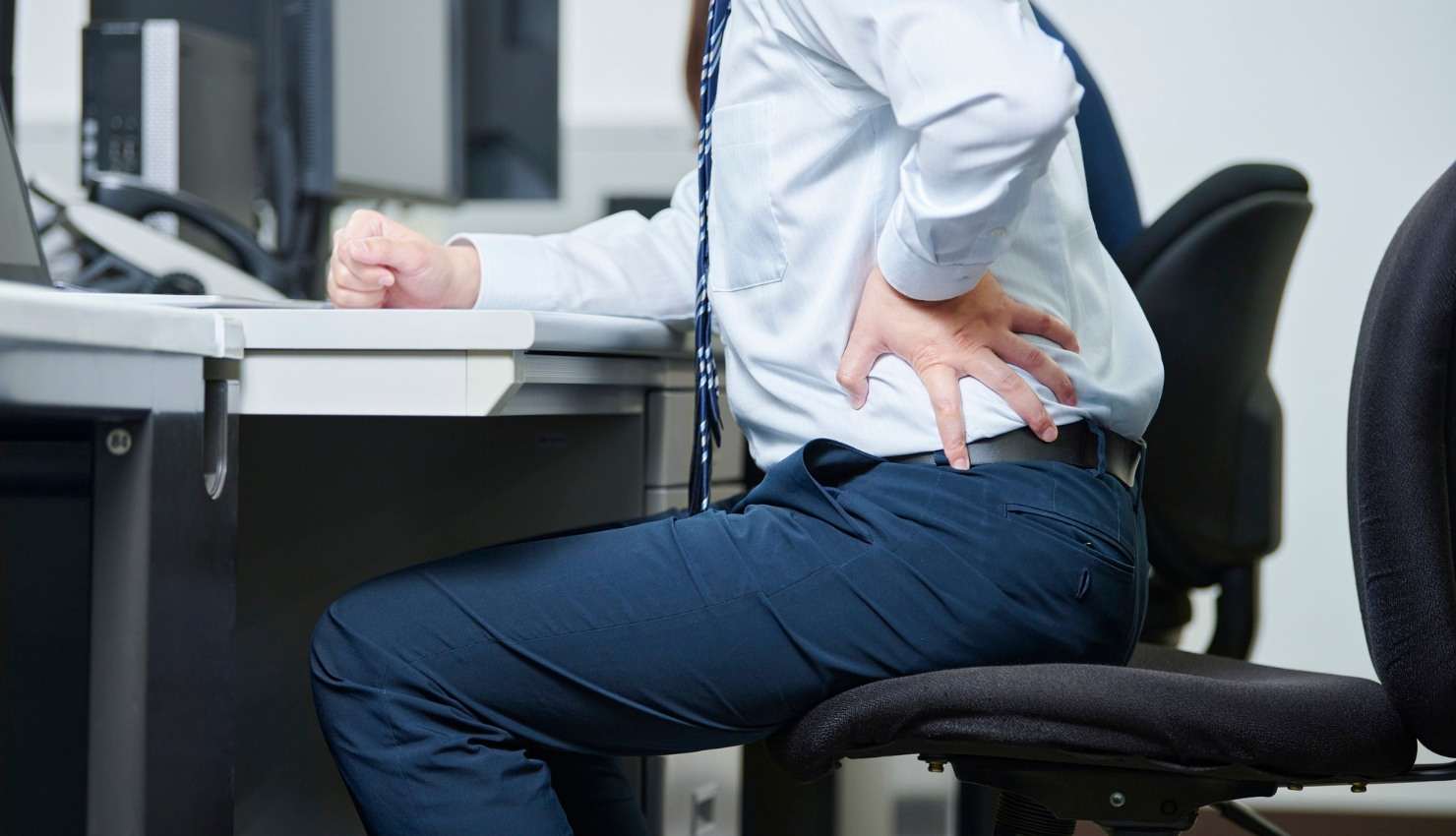
The seated position puts pressure on your lower back, especially when you:
Slouch forward toward your screen
Sit for long periods without moving
Use a chair without lumbar support
Position your keyboard or monitor incorrectly
These habits can lead to:
Compressed spinal discs
Weak core and glute muscles
Tight hip flexors and hamstrings
Poor circulation to the muscles and joints of the back
Prevention Starts with Ergonomics
? Set Up Your Desk for Spinal Health:
Chair: Use one with good lumbar support or add a small pillow behind your lower back.
Feet: Keep them flat on the floor or on a footrest.
Monitor: The top third of your screen should be at eye level to reduce neck strain.
Keyboard & Mouse: Keep elbows at 90° and wrists straight.
A properly aligned workstation reduces the load on your spine and helps you maintain healthy posture throughout the day.
Daily Habits That Keep Pain Away
?? Move Every 3060 Minutes:
Even if your posture is perfect, staying still too long leads to stiffness and discomfort.
Stand up
Do light stretches
Walk around your room or office
?? Strengthen and Support:
Build the muscles that stabilize your spine.
Core strengthening: Exercises like planks and bridges support your lower back.
Glute activation: Strong glutes reduce load on the lumbar spine.
Upper back mobility: Shoulder rolls and thoracic extensions counteract slouching.
????? Stretch Whats Tight:
Desk jobs shorten certain muscle groups. Stretch daily:
Hip flexors
Hamstrings
Chest and shoulders
Lower back
How Physiotherapy Can Help
If youre already experiencing pain, a physiotherapist can:
Assess your posture and movement patterns
Use manual therapy to reduce tension and restore mobility
Design a tailored exercise program to correct muscle imbalances
Guide ergonomic modifications specific to your work needs
Early intervention can prevent acute discomfort from becoming a long-term condition.
Signs You Should Seek Help
Pain that radiates into your leg (sciatica)
Numbness, tingling, or weakness
Pain that worsens with sitting or improves with standing
Stiffness that limits your mobility
These may indicate more serious spinal issues that require professional treatment.
Quick Desk Routine (Do 23 Times Daily)
? Takes just 5 minutes!
Seated spinal twist 15 seconds per side
Shoulder rolls 10 forward, 10 back
Chest opener stretch Clasp hands behind back and lift slightly
Standing back extension Place hands on hips and gently arch backward
Hamstring stretch Stand and reach for your toes, keeping knees soft
Final Thought
Back pain from desk work isnt inevitable. With proper posture, regular movement, targeted stretches, and the support of physiotherapy, you can prevent and even reverse the discomfort caused by sitting too long. Make small changes todayyour back will thank you tomorrow.