When you sit too long:

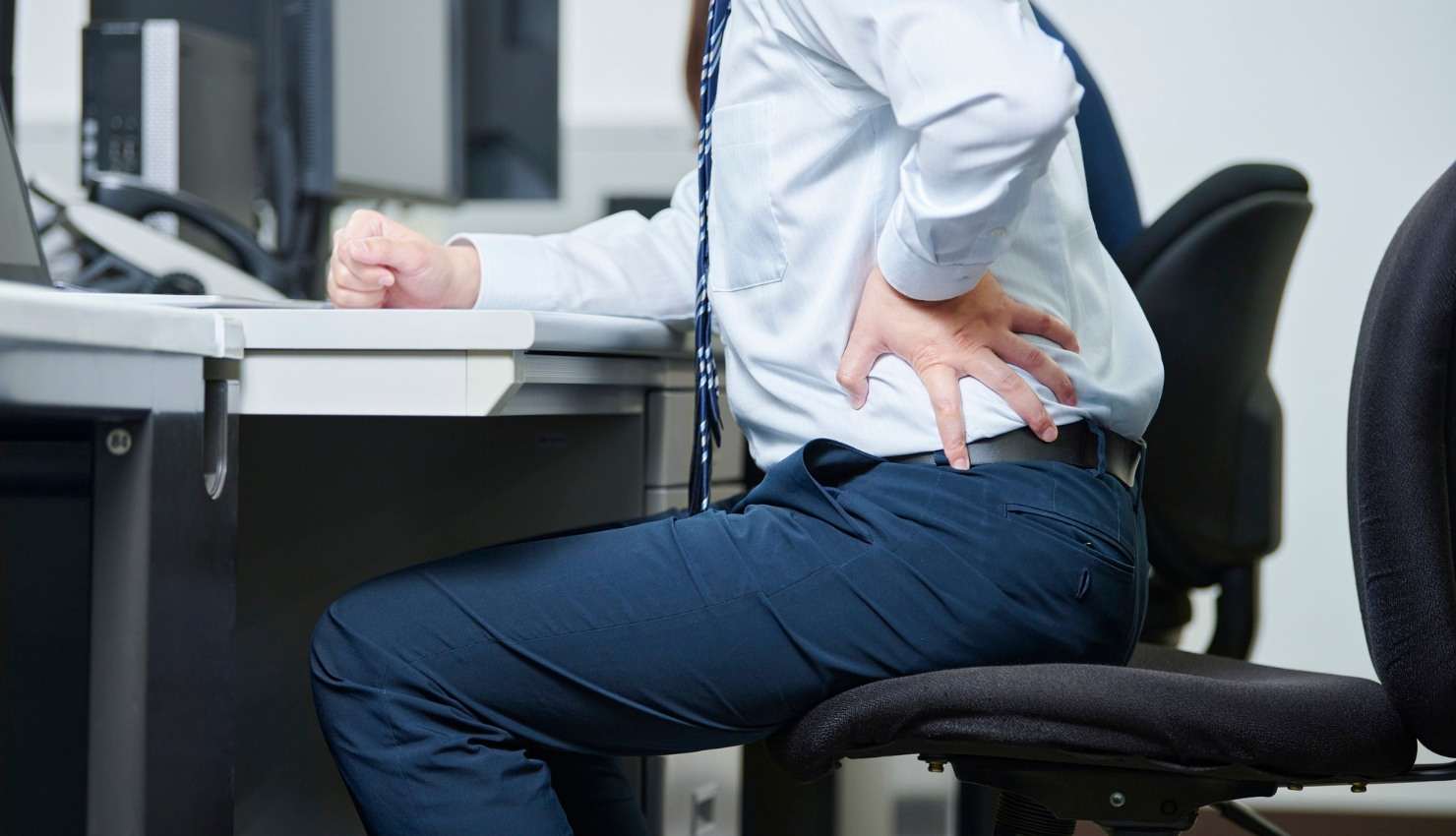
When you sit too long:
Muscles like hip flexors, hamstrings, and chest become tight
Core and glute muscles weaken, compromising support for the spine
Spinal discs compress, especially in the lower back
Circulation slows, leading to fatigue and stiffness
?? The result? Aches, poor posture, and long-term dysfunction.
? How to Prevent Desk-Related Pain
1. ?? Set Up Your Desk Ergonomically
Proper alignment minimizes strain on your spine, neck, and shoulders.
Key tips:
Chair height: knees at 90°, feet flat on the floor
Lumbar support: keep the natural curve of your lower back
Monitor: top of screen at eye level, about an arms length away
Keyboard/mouse: elbows bent at 90°, wrists straight
?? Good posture is your first defense against pain.
2. ? Use the 30:5 Rule Move Every 30 Minutes
Even perfect posture wont help if you dont move.
Every 3060 minutes:
Stand up and walk for 12 minutes
Do 10 squats, heel raises, or shoulder rolls
Stretch your arms overhead and breathe deeply
?? Movement boosts blood flow, loosens stiff joints, and refreshes your focus.
3. ????? Stretch Key Muscle Groups Throughout the Day
Target areas that tighten during prolonged sitting:
? Neck & Shoulders
Chin tucks
Shoulder rolls
Upper trap stretch (ear to shoulder)
? Lower Back & Hips
Seated spinal twist
Hip flexor stretch (kneeling lunge)
Glute stretch (ankle over opposite knee)
? Legs
Hamstring stretch (seated or standing)
Calf stretch (against a wall)
? Hold each stretch for 2030 seconds; repeat 23 times daily.
4. ?? Alternate Between Sitting and Standing
Use a sit-stand desk or stack boxes to elevate your screen.
Start with 15 minutes of standing each hour
Shift your weight or use a footrest to avoid locking your knees
Dont forget to maintain ergonomic alignment while standing!
?? Changing positions reduces spinal pressure and muscle fatigue.
5. ?? Strengthen Core and Postural Muscles
Weak core = more back pain.
Try these 23 times a week:
Glute bridges
Bird dogs
Wall angels
Planks (regular or wall)
Scapular retractions
?? Stronger muscles make it easier to sit with good posture effortlessly.
6. ?? Hydrate and Nourish Your Body
Dehydration makes muscles stiff and prone to cramping
Anti-inflammatory foods (e.g., berries, leafy greens, omega-3s) support tissue health
?? Healthy tissues move and recover betterhydrate like it’s your job.
?? Your “No More Pain from Sitting” Checklist
Chair, desk, and monitor are properly aligned
You move every 3060 minutes
You stretch key muscle groups 13 times daily
You alternate between sitting and standing
You strengthen core and posture muscles weekly
You stay hydrated and eat to reduce inflammation