Set Up an Ergonomic Workspace Choose the right chair: Use a chair that supports your lower back. Your feet should be flat on the ground, and your knees at hip level.

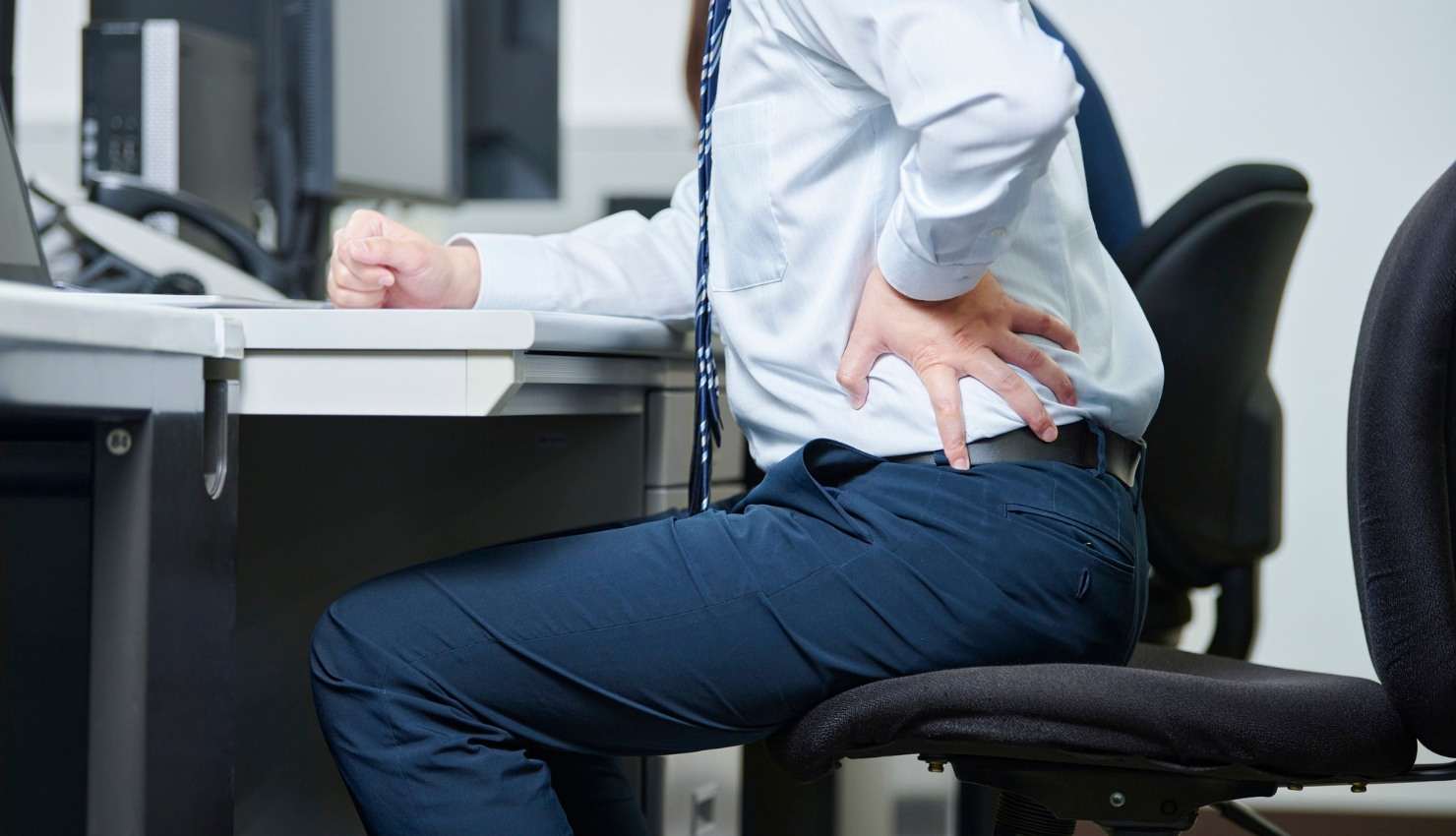
Set Up an Ergonomic Workspace
Choose the right chair: Use a chair that supports your lower back. Your feet should be flat on the ground, and your knees at hip level.
Desk height matters: Your arms should rest comfortably with elbows at about a 90-degree angle.
Screen positioning: Your monitor should be at eye level to prevent neck strain.
2. Avoid Prolonged Sitting
Take movement breaks: Stand, stretch, or walk for 5 minutes every hour.
Use a sit-stand desk if possible: Alternating between sitting and standing reduces pressure on your spine and boosts circulation.
Try active sitting: Consider using a stability ball or dynamic chair to engage core muscles.
3. Stretch Throughout the Day
Neck rolls and shoulder shrugs: Ease upper body tension from screen time.
Spinal twists and seated stretches: Help maintain flexibility and reduce lower back stiffness.
Wrist and hand stretches: Prevent carpal tunnel and tendonitis from repetitive mouse/keyboard use.
4. Pay Attention to Posture
Align your ears, shoulders, and hips: Keep your body upright, not slouched or leaning forward.
Avoid hunching over laptops: Use a laptop stand or external keyboard and monitor when possible.
Keep your feet grounded: Avoid crossing your legs for long periods, which can affect pelvic alignment.
5. Use Supportive Equipment
Wrist rests and mouse pads: Help reduce strain on hands and wrists.
Lumbar cushions: Provide extra support for your lower back if your chair lacks it.
Blue light filters or screen breaks: Reduce eye strain from prolonged screen use.
6. Stay Physically Active
Incorporate daily exercise: A mix of cardio, strength training, and flexibility work can prevent muscular imbalances.
Try micro-movements: Even small activities like calf raises or shoulder rolls at your desk can help circulation.
7. Listen to Your Body
Address discomfort early: Dont ignore recurring painit can lead to chronic injury.
Consult a physiotherapist: If pain persists, seek professional advice tailored to your specific posture and movement habits.