Common Home Office Injuries & Physiotherapy Solutions 1. Neck and Shoulder Pain

Common Home Office Injuries & Physiotherapy Solutions
1. Neck and Shoulder Pain
Often caused by screen misalignment, forward head posture, and static sitting.
Physiotherapy Solutions:
Postural training: Chin tucks, scapular retraction exercises
Manual therapy (if in clinic): Soft tissue release, joint mobilization
Stretching: Upper traps, levator scapulae, pecs
Ergonomic tips: Raise your monitor to eye level, keep elbows close to your body
2. Lower Back Pain
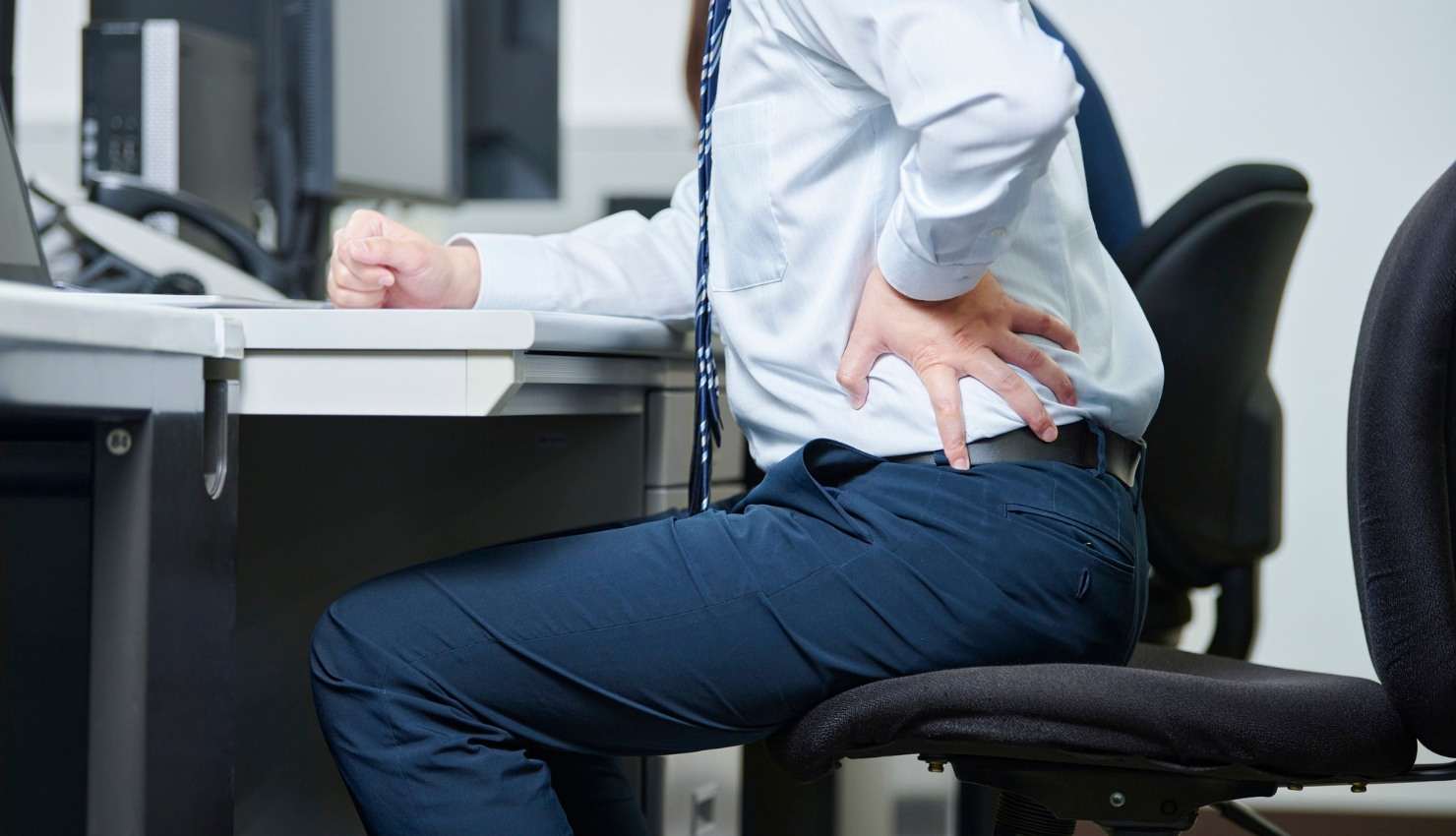
Caused by poor lumbar support, slouched posture, and weak core muscles.
Physiotherapy Solutions:
Core strengthening: Bird-dog, dead bug, glute bridges
Mobility exercises: Cat-cow, lumbar rotations, pelvic tilts
Desk setup check: Adjust chair height and lumbar support
Standing desk breaks: Shift between sitting and standing every 3060 minutes
3. Wrist and Hand Pain / Carpal Tunnel Syndrome
From prolonged typing, poor wrist angle, and improper desk height.
Physiotherapy Solutions:
Nerve gliding exercises for median nerve
Stretching: Wrist flexors/extensors, finger tendons
Strengthening: Grip and forearm muscle exercises
Ergonomics: Use a wrist rest, keep wrists neutral, adjust mouse/keyboard
4. Hip Tightness and Sciatic-Like Pain
From sitting too long or compressed posture.
Physiotherapy Solutions:
Stretching: Hip flexors, piriformis, hamstrings
Strengthening: Glutes and core muscles
Postural cues: Sit tall, avoid crossing legs
Movement routines: Mini walk breaks, standing desk use
5. Eye Strain and Headaches
Linked to screen fatigue and neck muscle tension.
Physiotherapy Solutions:
Postural retraining to reduce neck strain
Occipital release techniques (self-massage or guided)
Eye rest strategies: 20-20-20 rule
Lighting: Reduce screen glare, improve ambient lighting
??? Physiotherapy Tools for Your Home Office
Lumbar support cushion
Foam roller or massage ball (for muscle release)
Resistance bands (for posture exercises)
Ergonomic mouse/keyboard
Standing desk converter or sit-stand chair
????? Daily Injury Prevention Routine (510 mins)
Chin tucks 10 reps
Shoulder rolls 10 forward/10 backward
Seated spinal twist 5 each side
Wrist flexor/extensor stretches 30 sec each
Hip flexor stretch 30 sec each side
Glute bridge or bird-dog 10 reps
?? Repeat 12x per day or during work breaks
?? Final Physiotherapy Insight
Most home office injuries arent caused by traumatheyre caused by repetition, stagnation, and misalignment. The solution isnt just restits active retraining of your bodys natural mechanics.
Treat the source, not just the symptoms. Physiotherapy restores healthy movement patterns.