Top Physiotherapy Exercises to Improve Your Dance Endurance explores targeted strategies for recovery. Discover new paths to mobility, healing, and personalized care.

Dynamic Core Stabilization (e.g., Dead Bug or Bird-Dog)
Why: Core endurance supports balance, posture, and controlespecially during long rehearsals and complex routines.
How to Perform Bird-Dog:
On all fours, extend one arm and the opposite leg.
Hold for 510 seconds, keeping your spine neutral.
Repeat 1012 reps per side.
Benefits: Enhances postural strength and pelvic control, reducing fatigue-related technique breakdown.
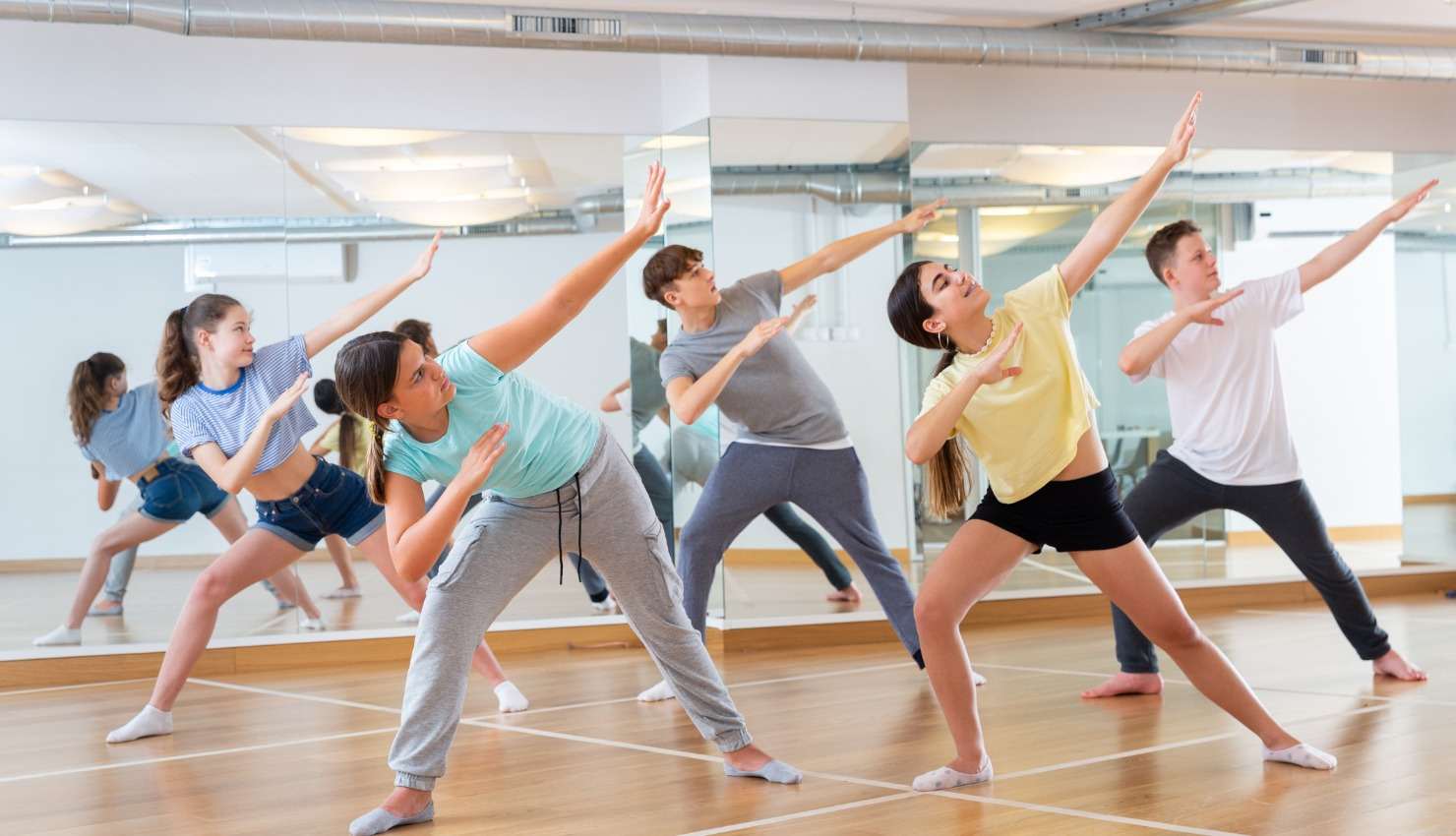
2. Lunges with Overhead Reach
Why: Combines lower-body strength with dynamic range of motion, mimicking movements used in dance sequences.
How to Perform:
Step into a lunge while reaching both arms overhead.
Hold briefly, return to standing.
Alternate legs for 1015 reps per side.
Benefits: Builds lower-limb endurance, stretches hip flexors, and trains balance.
3. Calf Raises with Balance Challenge
Why: Strong calves improve jump endurance and reduce fatigue in pointe and demi-pointe positions.
How to Perform:
Stand on one foot or both, rise onto the balls of your feet.
Slowly lower and repeat 2030 reps.
Progress by doing it on an unstable surface (like a foam pad).
Benefits: Builds endurance in the gastrocnemius and soleus muscles crucial for foot control and propulsion.
4. Pilates Leg Circles
Why: Targets hip stability and core strength while improving muscular endurance around the pelvis.
How to Perform:
Lie on your back, one leg extended to the ceiling.
Slowly circle the leg clockwise and counterclockwise (10 reps each).
Benefits: Enhances pelvic control and reduces compensatory muscle fatigue during turnout or leg extensions.
5. Interval Cardio Circuits (Low-Impact Options)
Why: Cardiovascular endurance is essential for sustained performance.
Sample Circuit (Repeat 34 rounds):
1 min marching in place with high knees
1 min jumping jacks or low-impact jacks
1 min plank to pike
1 min rest
Benefits: Builds aerobic capacity while minimizing joint strain.
6. Wall Sits with Arm Port de Bras
Why: Simulates isometric lower-body endurance while incorporating upper-body control.
How to Perform:
Sit against a wall at 90 degrees.
While holding, perform slow, controlled arm movements (e.g., port de bras).
Hold for: 3060 seconds. Repeat 23 sets.
Benefits: Strengthens quads, glutes, and postural muscles under sustained load.
7. Theraband Resistance Footwork
Why: Dancers often experience fatigue in the small stabilizing muscles of the feet.
How to Perform:
Use a resistance band to perform:
Theraband point/flex
Theraband ankle circles
Theraband dorsiflexion
Reps: 1520 per exercise.
Benefits: Builds endurance in foot muscles, preventing cramping and supporting prolonged pointe work.
Bonus Tip: Breath Control Training
Incorporate diaphragmatic breathing during exercises to:
Improve oxygen efficiency
Reduce performance anxiety